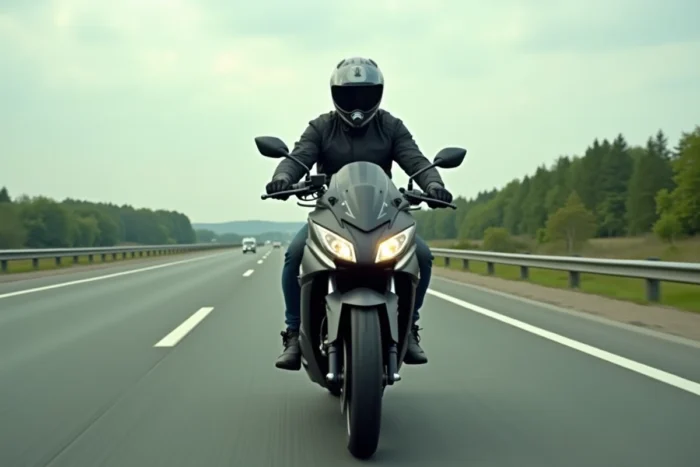
Choosing a scooter suitable for the highway requires understanding what distinguishes an urban vehicle from one designed for fast lanes. The Highway Code imposes a minimum engine capacity to access expressways, which immediately rules out all 50 cc scooters and directs you towards models capable of maintaining a stable speed of 130 km/h without pushing the engine to its limits.
Engine Capacity and Power: The Real Threshold for Maintaining 130 km/h
A 125 cc scooter approved for fast lanes often tops out between 110 and 120 km/h. At this speed, the engine operates continuously at maximum revs. Mechanical wear accelerates, and there is no reserve left for overtaking or reacting to unexpected situations.
To find the best scooter for the highway, you should aim for at least 300 cc. From this engine capacity, the engine can maintain 130 km/h without straining. The maxi-scooters from 400 to 650 cc provide significantly higher torque for acceleration and overtaking, enhancing active safety on fast lanes.
The real criterion is not the top speed listed in the specifications. What matters is the engine’s ability to cruise at highway speeds while using only a fraction of its total power. A scooter operating at 70% of its capacity vibrates less, consumes less, and tires its rider less.
ABS Braking and High-Speed Stability
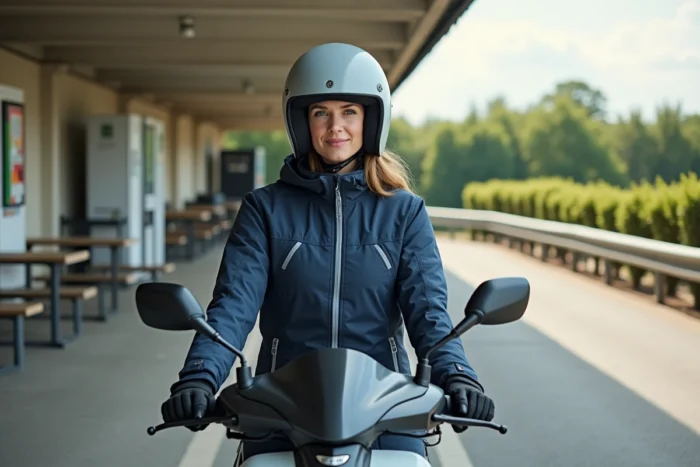
The braking distance of a two-wheeler at 130 km/h increases significantly compared to urban use. An ABS system prevents wheel lock during emergency braking, even on wet or gritty surfaces, where loss of grip can occur in a matter of milliseconds.
In the used market, not all models are equipped with ABS. Checking for its presence before purchase remains a non-negotiable precaution for any regular highway use.
Chassis and Road Holding
Larger diameter wheels better absorb road imperfections and are more resistant to crosswinds, which are common on exposed stretches. The geometry of the chassis also directly affects the feeling of stability beyond 100 km/h.
The suspensions complement this picture. Too soft damping, calibrated for urban comfort at low speeds, causes annoying oscillations at highway speeds. Maxi-scooters designed for long trips often feature adjustable or preloaded suspensions, which adapt to the weight of the rider and a potential passenger.
Electric Scooter on the Highway: Still Limited Range
No mainstream electric scooter currently allows for more than a hundred kilometers on the highway without recharging. The thermal engine remains the only realistic option for regular fast lane trips.
Physics explains it simply: aerodynamic resistance increases with the square of the speed. Moving from 50 to 130 km/h dramatically increases energy consumption to considerable levels. The range advertised by manufacturers, usually measured under urban conditions, drops drastically as soon as the scooter operates at sustained highway speeds.
- The fast charging network suitable for electric scooters is still in its infancy at French highway rest areas
- Specialized guides for planning electric routes recommend avoiding fast lanes to preserve battery life
Technology is progressing, but the thermal engine retains a structural advantage over long, fast distances. For frequent highway use, the electric scooter remains a premature choice.
Comfort and Equipment for Long Highway Trips
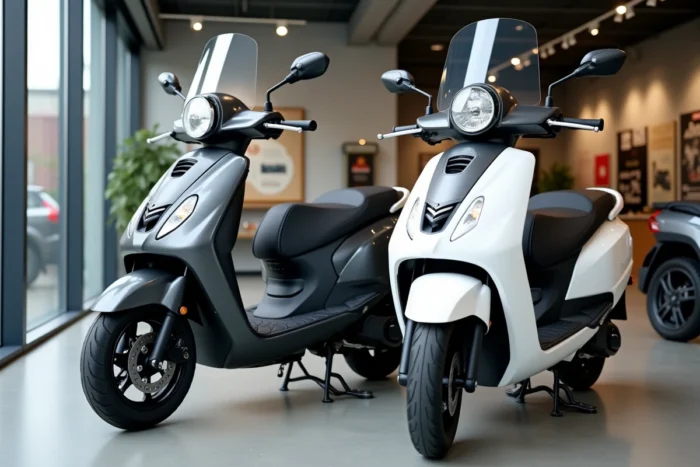
Thirty minutes on the highway and two hours of continuous travel have nothing in common. Postural fatigue, aerodynamic noise, vibrations: everything accumulates quickly on a scooter that hasn’t been designed for this use.
Windshield and Aerodynamic Protection
A tall windshield or adjustable screen significantly reduces wind pressure on the torso and helmet. Seemingly trivial in the city, this point becomes crucial beyond 100 km/h. Some maxi-scooters offer an electrically adjustable screen, which changes height according to speed.
Seat and Ergonomics
A wide seat with good lumbar support prevents back pain on long journeys. GT or touring models often include a driver backrest or a sculpted seat that supports the pelvis. For two-up riding, it’s essential to check the passenger seat space and the presence of dedicated footrests.
- Heated grips: almost essential for morning departures or winter trips at 130 km/h
- Under-seat storage: a compartment large enough for two full-face helmets simplifies every stop at a highway rest area
- Cruise control: available on some high-end maxi-scooters, it relieves the right hand on long straight stretches
A reliable highway scooter combines an engine capacity of at least 300 cc, ABS braking, a stable chassis at high speeds, and comfort suitable for extended journeys. Maxi-scooters that meet these four criteria can be found in the 300 cc range and above. Below this, the highway remains legally accessible, but the safety margin and comfort decrease too quickly to ensure serene daily trips.