The clothing style is based on a simple technical principle: each piece worn sends a visual signal (color, cut, texture, proportion) that, combined with others, forms a readable or blurred silhouette. Expressing one’s style with elegance and originality means mastering these signals to produce a recognizable visual coherence, without uniformity.
Proportions and volumes: the technical foundation of an elegant silhouette
Before discussing colors or trends, the proportion between the upper and lower body determines the overall reading of an outfit. A fitted top paired with loose bottoms creates a contrast of volumes that structures the silhouette. The reverse also works: an oversized top tucked into slim pants redefines the waist.
The relationship between upper and lower volumes conditions the entire look. Two loose pieces worn together flatten the silhouette, while two very fitted pieces can stiffen movement. The principle is not arbitrary: it relies on the visual balance between the masses of fabric.
To test this relationship, a simple exercise involves putting on the same bottom piece (straight pants, for example) with three tops of different volumes. The difference in reading is immediate and allows one to identify the contrast that corresponds to their morphology, without following a fixed rule. Resources like amoureusement-mode.com regularly explore these volume combinations in concrete looks.
Personal color palette: building a coherent wardrobe
Color is the most immediate signal of an outfit. Wearing shades that work together and with one’s natural complexion avoids the “costume” effect and enhances perceived elegance.
Defining a core of three to five colors
A limited palette facilitates all combinations. The principle: choose two neutrals (black, navy, gray, beige, off-white) and add two or three accent shades that regularly appear in the wardrobe. These accents are the colors that naturally catch the eye when browsing a rack.
This core does not mean giving up on fantasy. It serves as a compatibility grid: any new piece that enters the wardrobe must be able to combine with at least two others already present. This intentional constraint is precisely what produces originality, as it forces thoughtful associations rather than impulsive purchases.
Testing material combinations within the same color range
A tone-on-tone look by varying textures (matte cotton, ribbed knit, smooth leather) generates a visual richness that the multiplication of colors does not always produce. The contrast of materials replaces the contrast of colors and gives a discreet depth to the outfit.
Sustainable pieces and anti-fast-fashion law: a lever for originality
The French law aimed at reducing the environmental impact of the textile industry, published on July 8, 2026, establishes from September 1, 2026, a modulation of eco-contributions. Specifically, brands that produce massive volumes of disposable clothing see their contributions increase, while those that design repairable or upcyclable pieces are favored.
At the European level, the ecodesign regulation (ESPR) that came into effect in July 2026 prohibits the destruction of unsold textiles and encourages brands to offer less ephemeral collections. These new rules encourage pieces designed to last and evolve, through repair, customization, or creative repurposing.
For personal style, this underlying trend changes the game. Investing in a well-cut garment, made from dense material, with finishes that allow for alterations, produces a more unique result than accumulating fast-fashion pieces. A tailored coat, a vintage jacket with changed buttons: these actions build a wardrobe that no recommendation algorithm can replicate.
Fashion accessories: the details that define a look
Accessories function like punctuation in a text. Too many can clutter the reading. When well-balanced, they clarify the intention.
- The belt worn over a loose piece (flowy dress, oversized blazer) restructures the waist and radically changes the perceived proportion of the garment, without changing the outfit.
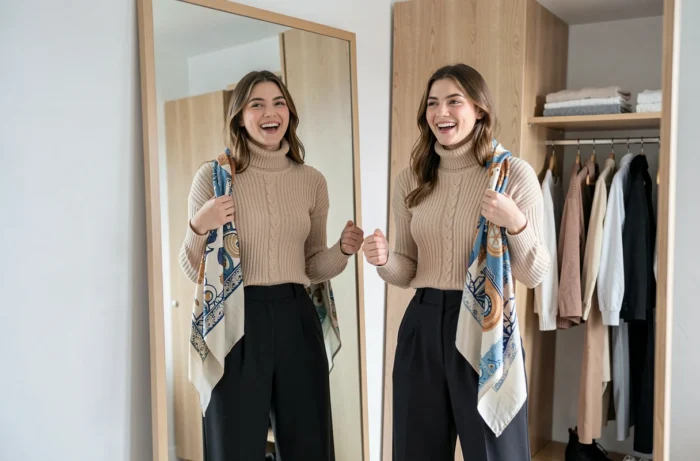
- The scarf, tied around the neck, in the hair, or on the handle of a bag, injects an accent color or pattern into a monochrome look. Its strength lies in its versatility: the same silk square produces very different effects depending on its placement.
- Sunglasses, beyond their function, frame the face and direct the stylistic register. A fine rectangular frame and a thick round frame do not tell the same story, even on the same outfit.
- One strong accessory per outfit is enough to create a visual signature. Stacking rings, necklaces, scarves, and hats dilutes the impact of each.
Mixing clothing registers: when originality arises from contrast
Conventional elegance relies on the coherence of a single register (either fully dressed or fully casual). Originality, on the other hand, often emerges from the skillful mixing of two registers.
Wearing a structured blazer with raw jeans and white sneakers is the most common example, but the principle goes further. Combining a formal piece with an unexpected element creates a visual tension that captures attention. A flowy dress worn with chunky-soled ankle boots. A three-piece suit with a round-neck t-shirt. The contrast works as long as it concerns only one element of the outfit.
Two simultaneous contrasts (for example, a tracksuit paired with heels and an evening bag) tip into costume rather than style. The operational rule: only one break in register per look, with the rest of the outfit remaining in a coherent vocabulary.
- Formal + sportswear: blazer with sneakers, shirt with technical shorts.
- Dressed + utilitarian: evening dress with cargo jacket, pleated skirt with hiking boots.
- Classic + artisanal: suit with handmade jewelry, trench with a raw canvas bag.
The choice of which register to “break” depends on the context and the intended message. A formal-sportswear mix sends a signal of relaxed confidence. A dressed-utilitarian mix asserts a grounding in the concrete. These conscious clothing decisions constitute the difference between following fashion and expressing a style.
Building a wardrobe that reflects one’s personality requires fewer purchases and more decisions. Each piece kept, altered, or combined differently contributes to a visual vocabulary that refines over time, not with the number of shopping bags.