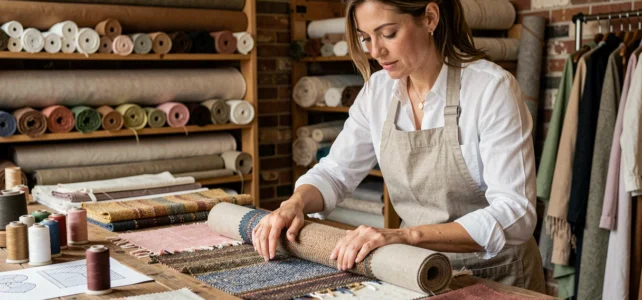
The word textile comes from the Latin textilis, meaning “woven.” This simple etymology conceals a field whose scope has significantly expanded: natural fibers, synthetic fibers, technical fabrics for aerospace or health, mass-market clothing. Understanding what the textile field encompasses today requires going beyond the mere image of clothing on a hanger to incorporate regulatory, environmental, and industrial constraints that are profoundly reshaping the industry.
European textile regulation: what is changing concretely since 2025
The European textile sector is undergoing an unprecedented regulatory phase. Since January 1, 2025, separate collection of textile waste is mandatory in all EU member states. Local authorities must set up dedicated collection points for used clothing and textiles, restructuring the entire downstream chain.
At the same time, the revision of the framework directive on waste, which came into effect on October 16, 2025, establishes harmonized extended producer responsibility (EPR) schemes for textiles and footwear. The financial contributions from brands are adjusted based on the sustainability and recyclability of their products.
Since July 19, 2026, the European regulation on the ecodesign of sustainable products (ESPR, regulation (EU) 2024/1781) prohibits large companies from destroying unsold new clothing and footwear, except for justified safety reasons. This measure, which goes beyond the scope of the French AGEC law, requires industry players to integrate reuse, donation, refurbishment, or recycling into their business model.
The definition of the textile field thus extends well beyond manufacturing: it now encompasses the end-of-life management of collections, traceability, and environmental compliance.
Textile fibers and manufacturing processes: beyond cotton and polyester
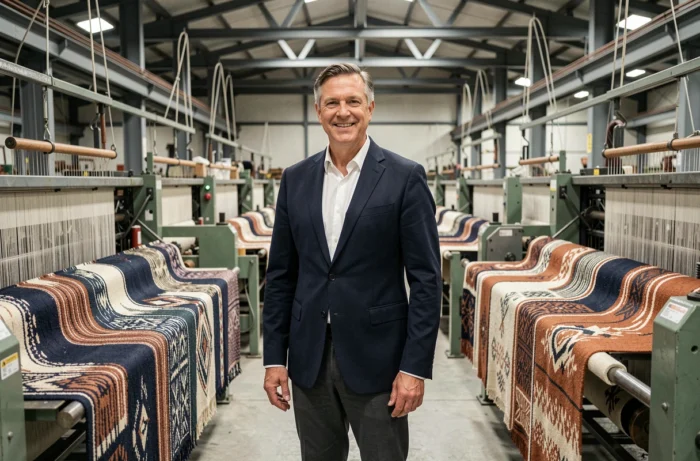
A textile is a flexible two-dimensional material made up of fibers. It can be obtained through weaving, knitting, or non-woven processes. This technical definition, stable for decades, conceals a constantly expanding diversity of materials.
Natural, synthetic, and bio-sourced fibers
Natural fibers (cotton, linen, wool, silk) remain benchmarks for clothing and furnishings. Synthetic fibers (polyester, polyamide, elastane) dominate global production by volume, driven by their cost and technical properties.
A third segment is gaining importance: bio-sourced and recycled fibers. Recent European regulations are pushing manufacturers to develop recyclable materials or those derived from renewable resources, under the threat of increased EPR contributions.
Four structuring industrial steps
The manufacturing of a textile product follows a well-defined sequence:
- Spinning transforms raw fiber into usable yarn, whether it is carded cotton or extruded polymer.
- Weaving or knitting assembles the yarns into fabric. Weaving produces fabrics with weaves (plain, twill, satin), while knitting creates softer and stretchable stitches.
- Finishing includes dyeing, printing, and finishing treatments (waterproofing, anti-wrinkle, fireproofing).
- Sewing cuts and assembles the fabric into a finished product, from clothing to car seats.
Each step requires distinct skills and equipment. A technical fabric intended for aerospace does not go through the same lines as a jersey for t-shirts, even though the transformation logic remains the same.
Textile and fashion: a relationship of mutual dependence
Fashion remains the primary outlet for textiles in France and Europe. Clothing, accessories, leather goods, shoes: the clothing industry absorbs the majority of textile production intended for the end consumer.
However, textiles are not limited to fashion. Technical textiles represent an expanding segment in automotive (seats, doors, airbags), aerospace (composites for fuselage and wings), medical (dressings, implants, compression garments), and sports (reflective fabrics, waterproof membranes).

The pressure of fast fashion on the sector
The fast fashion model, based on rapid rotations of low-cost collections, has profoundly altered expectations regarding production timelines and costs. France has adopted a specific law aimed at regulating ultra-fast fashion practices, the effects of which on the entire industry extend beyond just the low-end segment.
This pressure results in a constant tension between volume, price, and environmental requirements. Brands that focus on sustainability must contend with higher raw material and regulatory compliance costs, without any guarantee that consumers will accept the price difference.
Digital textile passport: traceability and transparency by 2027
The ESPR regulation provides for the gradual implementation of a digital passport for textile products. This system will reveal to consumers the exact composition, origin of materials, manufacturing conditions, and environmental footprint of each garment.
The environmental labeling of textiles, which is set to be deployed in France starting in October 2026, constitutes an intermediate step. It will assign each product a score based on several criteria (greenhouse gas emissions, water consumption, use of chemical substances).
The available data do not yet allow for measuring the actual impact of these systems on purchasing behaviors. Field feedback varies on the average consumer’s ability to utilize this information at the time of purchase. What is certain is that traceability will become a legal obligation, not an optional marketing argument.
The textile field, as it is being redefined since 2024, is no longer just a matter of fibers and weaving machines. European regulation is making it a sector where environmental compliance, traceability, and circular economic models now condition access to the market. Companies that do not integrate these parameters into their strategy risk incurring compliance costs and facing marketing restrictions in the European market.