
Aging well refers to the simultaneous maintenance of physical, cognitive, and social abilities as one ages. It is not an abstract goal: since Law No. 2024-317 of April 8, 2024, the society of aging well and autonomy has a legal framework that structures prevention, the rights of residents in facilities, and the coordination of departmental actors. Understanding these mechanisms allows for concrete choices, whether one lives at home or in a facility.
2024 Aging Well Law: What the New Legal Framework Changes
The law of April 8, 2024, introduced a daily visiting right for residents in medical-social establishments. This measure directly addresses the situations of isolation documented during the health crisis, where some loved ones were denied access for weeks.
The text also creates a departmental public service for autonomy (SPDA), designed as a single point of contact for elderly people and their families. Its role is to coordinate local autonomy actors (home help, nursing care, meal delivery) to avoid duplication and disruptions in care pathways.
Furthermore, the law strengthens controls in establishments and the fight against abuse, with a multi-year programming of public finances dedicated to the elderly. Finding all the information on Ma Santé 360 helps to situate these measures within a comprehensive approach to health after 60.
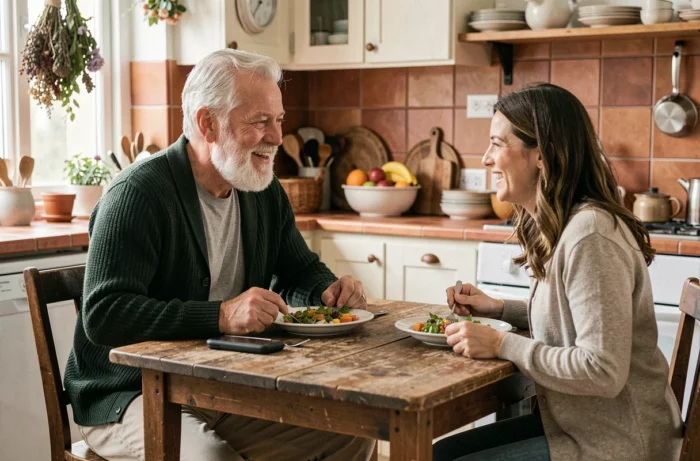
Prevention of Loss of Autonomy: Concrete Levers After 60
Prevention is not just a list of good habits. It relies on three pillars, the effectiveness of which depends on their combination.
Adapted Physical Activity and Functional Abilities
Regular physical activity protects muscle mass and balance, two factors directly linked to the risk of falling. Daily walking, gentle muscle strengthening, or maintenance gymnastics are sufficient, provided they are practiced several times a week.
The goal is not athletic performance. Maintaining the ability to get up from a chair, climb stairs, or carry a shopping bag is the real functional objective. Prevention programs offered by pension funds (balance workshops, motor skills courses) specifically target these daily actions.
Nutrition and Hydration in Seniors
With age, the sensation of hunger decreases and thirst is less felt. These physiological changes increase the risk of malnutrition and dehydration, two aggravating factors for loss of autonomy.
Three meals a day supplemented by snacks (a yogurt, a fruit) maintain sufficient caloric intake. Proteins remain the priority nutrient to preserve muscle mass: eggs, fish, meat, or legumes at each main meal.
Hydration requires a conscious effort. Drinking water, herbal teas, or broths regularly, even without feeling thirsty, prevents episodes of confusion and fatigue related to dehydration.
Cognitive Stimulation and Social Connection
Social isolation accelerates cognitive decline comparably to certain medical risk factors. Activities that combine intellectual stimulation and interaction (board games, memory workshops, volunteering) act on both dimensions simultaneously.
Maintaining an active social network reduces the risk of depression and withdrawal. Local associations, social centers, and programs supported by pension funds offer accessible group activities, often free of charge.
Quality of Senior Facilities: Indicators to Check
Choosing a facility for a loved one (or for oneself) can no longer be based solely on a visit and a price. Transparency is increasing, and new quality indicators are now published for nursing homes.
Here are the criteria to examine before making any decision:
- The caregiver-to-resident ratio, which directly affects the quality of daily care and responsiveness in emergencies.
- The results of external evaluations, conducted by independent organizations and available on public platforms dedicated to the elderly.
- The existence of an establishment project that includes the prevention of loss of autonomy (adapted physical activities, cognitive workshops, nutritional programs).
- The actual respect for the daily visiting right established by the 2024 law, verifiable with the social life council of the establishment.
A nursing home that publishes its quality indicators signals a transparency approach that families can use as an objective selection criterion.

Coordination of Home Care: The Role of the Departmental Public Service for Autonomy
The majority of seniors wish to age at home. Home care works as long as the caregivers (housekeeper, nurse, physiotherapist, meal delivery) are coordinated. Without coordination, appointments overlap, prescriptions are lost, and caregivers become exhausted.
The SPDA created by the 2024 law aims to solve this structural problem. Its operation is based on a simple principle: a single point of contact per department to guide families to services suited to their situation. This service replaces the multitude of contact points (CLIC, MAIA, support platforms) that made the process unclear.
The effective implementation of the SPDA remains gradual depending on the regions. Checking with the departmental council whether the system is operational allows for quicker access to available aids: personalized autonomy allowance, housing adaptation assistance, support for caregivers.
Healthy aging does not solely depend on individual behaviors. The 2024 law has established a foundation of rights and public measures that change the concrete conditions of care. Knowing these tools, mobilizing them early, and verifying their local application remains the most effective approach to preserving autonomy over time.