Everyday leisure suffers from a blind spot: most lists recycle the same generic activities without taking into account real constraints (limited budget, small space, cognitive fatigue after work). We have selected ten concrete ideas that work without heavy logistics, with a focus on the stimulation/effort ratio.
1. Urban micro-adventure on foot with a thematic route

Walking in your own city following a specific theme (Art Deco architecture, murals, remarkable trees) transforms a mundane trip into a leisure activity. The thematic constraint forces attention and breaks the autopilot.
We recommend limiting the route to one hour and photographing each point of interest. Creating a visual diary over the weeks generates a collection effect that maintains motivation. No budget required, just a smartphone and a theme.
2. Home fermentation workshop to start with lacto-fermentation

Lacto-fermentation goes beyond simple culinary leisure. It is a technique that requires rigor (salt measurement, air exclusion, temperature control) and produces results in just a few days. To diversify activities without breaking the bank, the Scoopzilla website to discover lists complementary ideas.
A jar, salt, and seasonal vegetables are enough to launch a first batch. Gradual learning (sauerkraut, then kimchi, then hot sauce) structures the hobby over several months.
3. Paper game design with friends
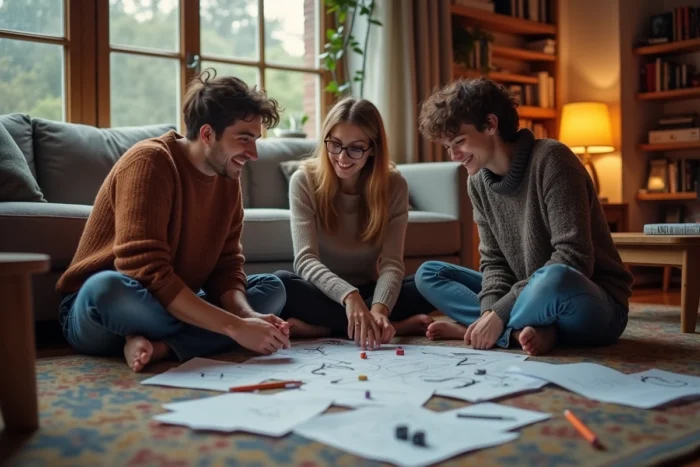
Designing a board or card game with original rules engages creativity much more than just playing it. Paper game design requires only cardboard, markers, and a group of testers.
The most effective method is to start with a unique mechanic (bidding, bluffing, placement) and iterate after each test game. The playtest sessions become entertainment in themselves, with guaranteed laughter when the rules malfunction.
4. Blind drawing to disconnect from screens
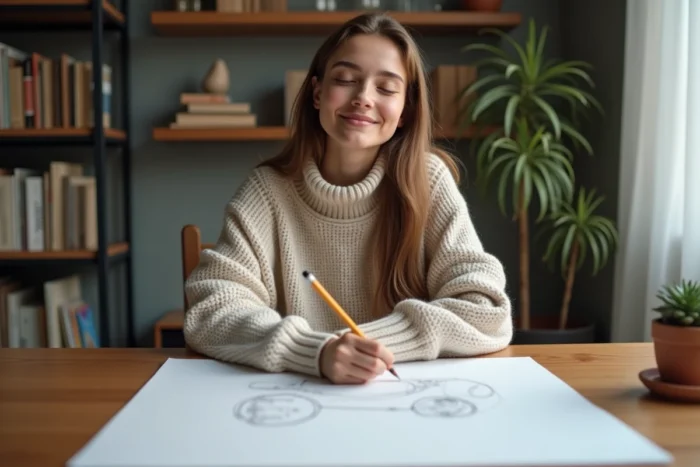
Blind drawing (tracing a subject without looking at the paper) is a classic exercise in art school, but it works remarkably well as a daily leisure activity. Five minutes is enough to produce a surprising result.
The absence of visual control eliminates the pressure of the outcome and induces immediate letting go. We find that this practice is particularly suitable for those who say they are “bad at drawing,” precisely because perfection is impossible.
5. Sound mapping of your neighborhood
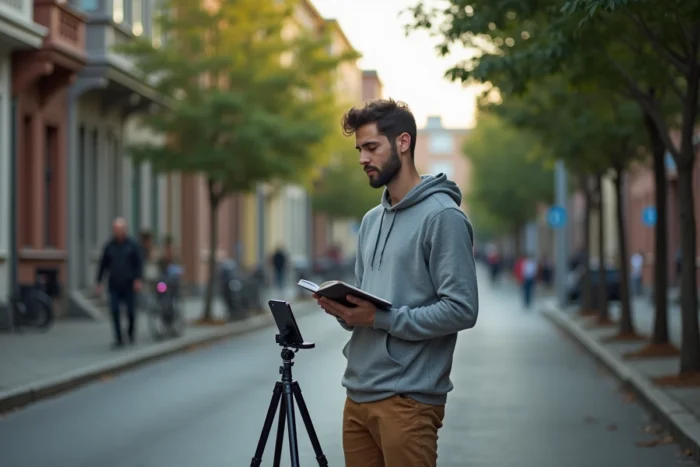
Recording the sounds of your environment (market, park, stairwell, fountain) and then assembling them into a soundscape is an activity at the intersection of creative leisure and active meditation. A simple smartphone recorder does the job.
The process of attentive listening alters the perception of daily life. You start to notice sounds that you previously filtered out. The final assembly can be done with free software like Audacity.
6. “Reverse pantry” cooking for fun without shopping

The principle: cook a complete dish using only what is left in the cupboards. This constraint transforms the chore of meal preparation into a creative challenge and reduces food waste.
The strict rule (no additional purchases) encourages unexpected combinations. We recommend timing yourself to add a playful dimension. The activity works particularly well with family or friends, with a blind vote on the results.
7. Handwritten correspondence with a stranger via exchange networks

Letter exchange platforms between strangers have existed for years, but the paper format imposes a slow pace that contrasts with digital communication. Writing a letter requires a level of formulation effort that texting never demands.
The wait for a response (several weeks) creates a pleasant anticipation. The cost is limited to the stamp and paper, making it an accessible hobby on a small budget.
8. Home obstacle course for children and adults
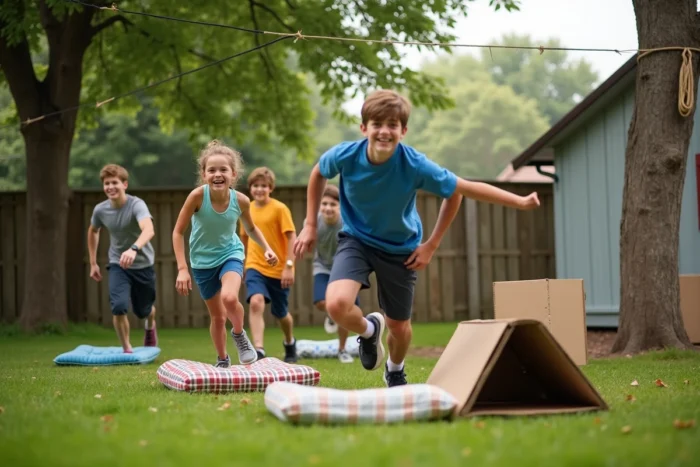
Building an obstacle course in the living room or garden with existing furniture (chairs, cushions, clotheslines) is a physical activity that requires no sports equipment. Kids love it, but adults also find it a real outlet.
Elements to vary to renew interest:
- Change the course each week by altering the order and nature of the obstacles
- Add constraints (blindfolded, carrying an object, timer)
- Integrate cognitive challenges between physical obstacles (puzzle, mental math)
9. Guided virtual tour of international museums

Free virtual tours offered by many museums are underutilized. The trick that transforms passive browsing into a true leisure activity: commenting aloud on each artwork as if you were a guide, alone or with others.
The exercise of oral improvisation in front of an unknown painting develops verbal fluency and produces comedic moments. It’s a free activity that works solo or with friends, without leaving home.
10. Daily log in three sentences

Keeping a journal seems time-consuming. The constraint of a maximum of three sentences per day removes this barrier. You note one fact, one feeling, and one intention for the next day.
Monthly re-reading reveals patterns invisible in daily life: recurring moods, activities that come back, abandoned projects. It’s a self-knowledge tool disguised as a writing hobby, taking only two minutes a day.
These ten activities share a common point: they divert already available resources (space, objects, downtime) to create entertainment without purchase or travel. The best daily leisure is the one that fits within the real constraints of your schedule, not one that requires a complete reorganization of your evenings.