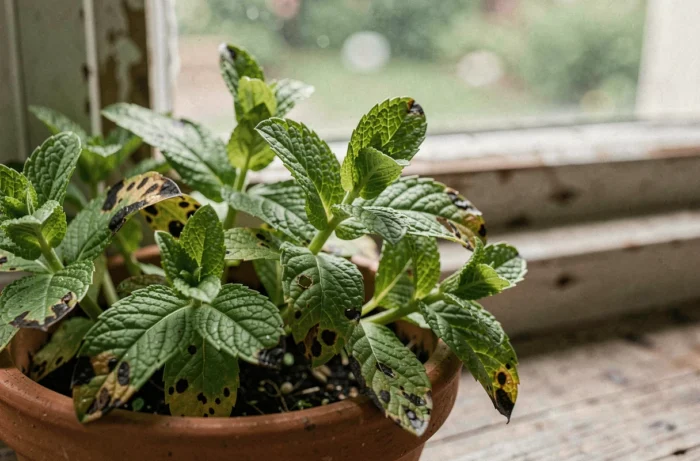
The darkening of mint leaves signals a specific stress, not a fatality. Depending on the location, texture, and speed of the appearance of the spots, the cause can be fungal, climatic, or related to pests. Identifying the correct mechanism before acting avoids blind treatment and the loss of a still consumable harvest.
Sooty mold and honeydew: the darkening caused by aphids on mint
Most guides on darkening mint directly point to powdery mildew or rust. However, a common case often goes unnoticed: sooty mold, a black fungus that colonizes the sweet honeydew deposited by aphids.
The mechanism is indirect. Aphids feed on the sap and excrete a sticky liquid on the surface of the leaves. This film becomes the substrate for a blackish fungus that resembles soot. The leaves appear black, but the darkening remains superficial: it can be partially wiped away with a damp cloth.
The distinction matters, as treating with sulfur or bicarbonate (suitable for classic fungal diseases) has no effect here. The source must first be eliminated: the aphids. A strong jet of water on the stems and the undersides of the leaves, repeated over several days, is often enough to dislodge the colony. Once the honeydew is stopped, the sooty mold ceases to progress, and the new shoots remain healthy.
Before looking for what to do if the mint darkens, check if your leaves are sticky to the touch: this is the most reliable sign to direct the diagnosis towards sooty mold rather than a foliage disease.

Fungal rust of mint: recognizing Puccinia menthae and limiting damage
Mint rust (Puccinia menthae) is a fungal disease specific to the Mentha genus. It first manifests as orange or brown-black pustules on the undersides of the leaves, then as yellow-orange spots on the tops. At an advanced stage, the leaves turn completely black and fall off.
This rust develops in humid and warm weather. A pot too close to a wall, overhead watering at the end of the day, or dense foliage without air circulation create ideal conditions.
Sanitary pruning and destruction of affected leaves
The first action is to remove all leaves with pustules. Never compost these leaves: the spores of Puccinia survive in compost and recontaminate the soil the following season. Dispose of them with household waste or burn them if local regulations allow.
A drastic cut, right at the soil level, may seem radical. Mint regrows quickly from its rhizomes. New stems will emerge healthy if the fungus has no foliage to colonize.
Treatment with micronized sulfur
Micronized sulfur, usable in organic farming, remains the reference treatment against rust. It acts preventively or as a mild curative. Apply it preferably in dry weather, avoiding days when the temperature significantly exceeds seasonal averages, as sulfur can cause leaf burn under high heat.
Baking soda against powdery mildew on mint: dosage and precautions
Powdery mildew produces a white fluff (not black), but heavily affected leaves eventually dry out and blacken at the edges. It is this late evolution that creates confusion with other types of darkening.
The baking soda treatment works well on mint powdery mildew. The recommended dosage in recent technical guides is as follows:
- Dissolve 5 to 7.5 g of baking soda per liter of water
- Add a teaspoon of liquid black soap as a wetting agent to help the solution adhere to the leaves
- Spray every 10 to 15 days, in dry weather, avoiding high heat to limit the risk of leaf burn
A rarely addressed point: powdery mildew is not toxic to humans, but it degrades the taste quality of the leaves and reduces their shelf life after harvest. Washing thoroughly and removing visibly affected parts before consumption remains the rule, even on a treated plant.
Frost, direct sunlight, and water stress: non-fungal darkenings of mint
Not all black leaves signal a fungus. Two abiotic causes can cause rapid darkening without any pathogen.
- Frost or a sudden cold snap turns the leaves completely black, soft, and translucent. The cellular tissue bursts due to frost, giving that characteristic “cooked” leaf appearance. Potted mint grown on a north-facing balcony is particularly vulnerable to late spring frosts.
- An excess of direct sunlight combined with dry soil causes blackened and then brittle leaf edges. This is not a chemical burn; it is localized cellular dehydration. Moving the pot to partial shade and resuming regular watering is generally enough to stop the progression.
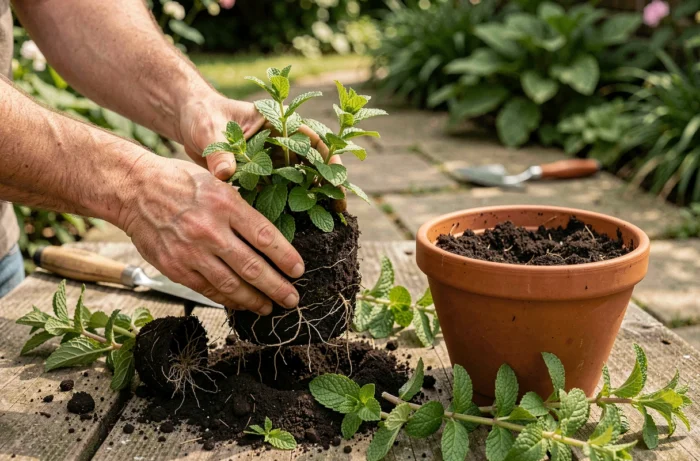
- Excessive watering on poorly drained substrate leads to root rot. The leaves then blacken from the base of the stem upwards. The potting soil often emits a sour smell. In this case, repotting in a draining substrate (soil-sand mix or soil-perlite) is the only viable solution.
Mint tolerates a wide range of conditions, but its foliage reacts quickly to extremes. A black plastic pot in full sun can raise the substrate temperature well beyond what the roots can tolerate, even with proper watering.
The most useful reflex when facing darkening mint remains observation before action. Sticky leaves, orange pustules under the blade, white fluff, soft and translucent tissue: each clue points to a distinct cause and an appropriate treatment. Pulling out the entire plant almost never makes sense, as the rhizomes will regrow as soon as the cause of the stress disappears.