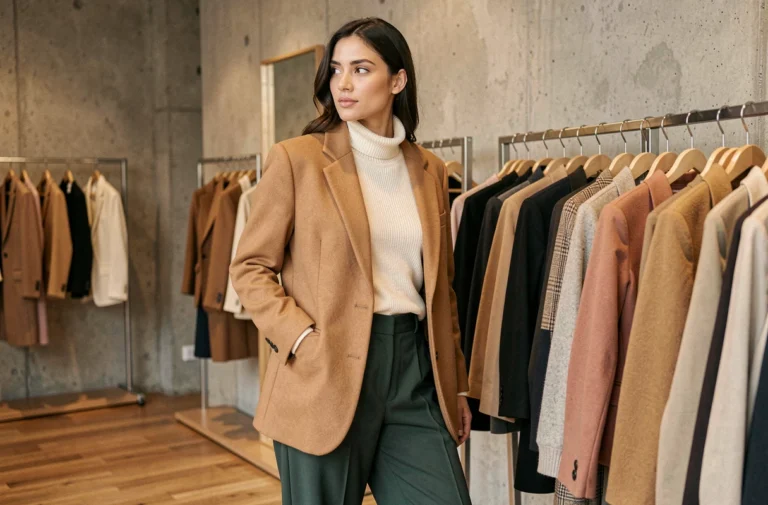
Style in everyday life is based on a simple technical principle: coherence between the volumes, materials, and colors of an outfit. Following fashion trends does not mean replacing your wardrobe every season, but understanding the mechanisms that allow you to integrate a standout piece into an existing wardrobe. The difference between a look that works and a disjointed assembly often comes down to two or three precise choices.
European Regulation on Unsold Textiles: What Changes for Style
Since July 19, 2026, large European companies are no longer allowed to destroy their unsold clothing, accessories, and shoes. This obligation stems from Article 25 of the Regulation (EU) 2024/1781 on the eco-design of sustainable products.
The concrete effect on fashion trends is direct. Brands must sell off their stock through other channels: clearance sales, donations, second-hand resale. For consumers, this means broader access to pieces from recent collections at reduced prices, including ranges that are usually not heavily discounted.
This regulatory framework also accelerates a change in design. Brands are producing shorter runs and focusing on pieces with a longer lifespan. The everyday wardrobe is being modified: cuts are becoming more versatile, and colors are more wearable across multiple seasons.
Adapting your style to this reality also means prioritizing clothing designed to last beyond a single trend, as Beauty Boo for fashion offers through its selections focused on sustainability.

Second-Hand and Character Pieces: An Underestimated Style Lever
In 2024, 65,800 tons of clothing and shoe textiles were sold second-hand in France, representing 7.4% of the volumes consumed in these categories according to the eco-organization Refashion. The second-hand textile market is now worth over 4.6 billion euros and accounts for nearly 40% of the total second-hand market.
These figures reflect a concrete shift. Second-hand is no longer a default choice, but a style strategy. Thrift stores and resale platforms provide access to pieces that current production no longer offers: vintage cuts, thick fabrics, discontinued patterns.
Building a Unique Look with Second-Hand
The key to integrating a second-hand piece into an everyday outfit lies in a principle of controlled contrast. A structured jacket from the 1990s can be worn over a contemporary basic (white t-shirt, straight jeans). The temporal mismatch between the pieces creates a personal style without the effort of accumulation.
- Look for a single standout piece per outfit (an oversized blazer, a geometric patterned dress, a raw wool coat) and pair it with neutral basics
- Check the quality of the seams and the fabric composition before purchasing: an old garment made of natural fibers ages better than a recent synthetic one
- Favor colors you already wear to avoid the “costume” effect and ensure rotation with the rest of your wardrobe
Color Palette and Volumes: The Technical Grammar of an Outfit
Wearing trends daily requires understanding how color combinations work. Monochrome remains the most reliable method for an immediate result: using several shades of the same hue (sandy beige, camel, chocolate) unifies the silhouette without complex thinking.
The alternative is to work in blocks. A high piece in a bright color (a terracotta sweater, a Klein blue blouse) combined with a neutral bottom (black, gray, navy) focuses attention on the upper body. This principle simplifies morning outfit choices and reduces mismatching errors.
Playing with Proportions Rather than Pieces
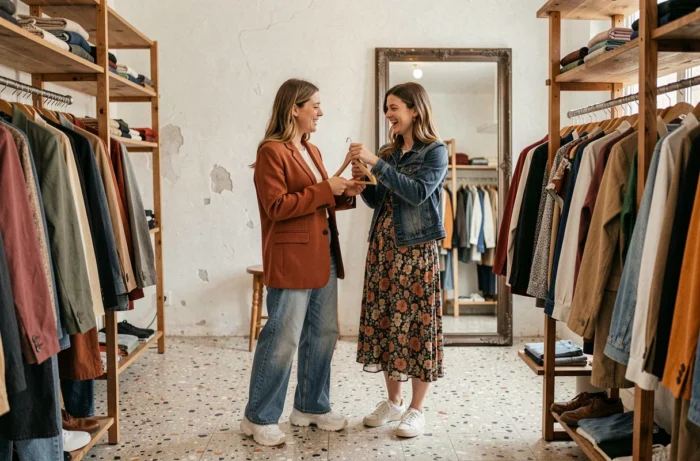
The volume of an outfit changes the look more than the piece itself. Wide pants worn with a fitted top create a structured effect. The opposite (loose top over slim pants) gives a relaxed silhouette.
Changing the proportions of the same outfit radically alters the perceived style. Tucking an oversized t-shirt into high-waisted pants transforms a relaxed look into a structured outfit. Adding a belt to a straight coat creates a defined waist from a straight cut. These adjustments cost nothing and require no purchases.
Clothing Care: Extending the Lifespan of a Style
A well-maintained garment retains its shape and color. A poorly washed garment loses its fit in a few months, regardless of its purchase price. Care is an integral part of the fashion approach, even if inspirational content often overlooks it.
- Wash cotton and linen pieces at 30 degrees to preserve fibers and limit shrinkage
- Lay knits (sweaters, cardigans) flat after washing to avoid shoulder distortion
- Space out washes of raw jeans: two to three wears between each wash maintain denim rigidity and color depth
- Use a steam iron rather than a regular iron on delicate fabrics (silk, viscose, fine wool)
These simple gestures allow you to wear the same pieces across multiple seasons without visible quality loss. A reduced but well-maintained wardrobe offers more combinations than a closet full of distorted clothing.
Everyday style is built through repeated technical choices, not impulsive purchases. Understanding volumes, mastering your color palette, integrating second-hand pieces, and properly caring for your clothes form a stronger foundation than any list of seasonal trends.