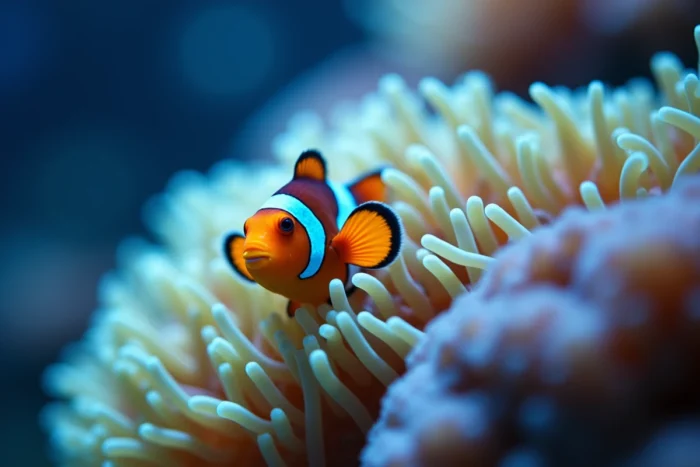
Clownfish, snail, spotted hyena: biology is full of species whose sexual functioning escapes the male/female classification. These animals do not experience gender in the human sense, but their biological peculiarities serve as powerful metaphors to represent non-binary gender identities. Comparing these biological mechanisms to identity categories allows for a better understanding of what each species illustrates, and what it does not convey.
Simultaneous hermaphroditism, gynandromorphism, and sex change: three distinct biological mechanisms
The vocabulary used to describe animal sexual diversity often mixes very different phenomena. Before associating them with human identities, it is essential to clearly distinguish them.
| Biological mechanism | Definition | Concerned species | Frequent identity analogy |
|---|---|---|---|
| Simultaneous hermaphroditism | The individual possesses both functional male and female reproductive organs | Snails, some reef fish | Bigender identities, fluidity |
| Sequential hermaphroditism | The individual changes sex during its life (protandry or protogyny) | Clownfish, wrasse, grouper | Transidentity, fluid gender |
| Gynandromorphism | The organism exhibits male characteristics on one side of the body and female characteristics on the other | Some butterflies, birds (cardinal), crustaceans | Non-binarity, simultaneous duality |
| Inverted or flexible sexual roles | One sex adopts behaviors typically associated with the other | Spotted hyena, jacana, seahorse | Gender non-conformity |
This table highlights a often overlooked point: each biological mechanism refers to a different facet of non-binarity. Grouping them under a single label “non-binary animals” impoverishes both biology and the discussion on gender.
The article from the Canadian Wildlife Federation reminds us that gynandromorphism remains extremely rare and has only been observed in a small number of insects, crustaceans, snakes, and birds. Its biological rarity contrasts with the symbolic visibility given to it by non-binary communities.
To delve deeper into the relationship between animal species and identity categories such as xenogender, one can consult the animal symbols of xenogender on Starlight Infos, which details the most common associations in online communities.
Clownfish and wrasse: sequential sex change as a mirror of fluid gender
The clownfish (protandrous) is born male and can become female when the dominant female of the group disappears. The cleaner wrasse works in the opposite way: dominant females transform into functional males. The sex of these fish depends on the social context, not on a fixed program.
This biological plasticity makes the clownfish one of the most cited animals in 2SLGBTQIA+ activist spaces to illustrate gender fluidity. The parallel works on a specific point: sexual identity is not a permanent state but an adaptive response to the environment.
However, the mechanism remains strictly binary in its outcome. The clownfish transitions from male to female, never to an intermediate state. The analogy with transidentity is more direct than with non-binarity in the strict sense. Nevertheless, genderfluid communities find resonance in it, as it is the process of transition itself that resonates, more than the endpoint.
Spotted hyena and seahorse: when gender roles are inverted
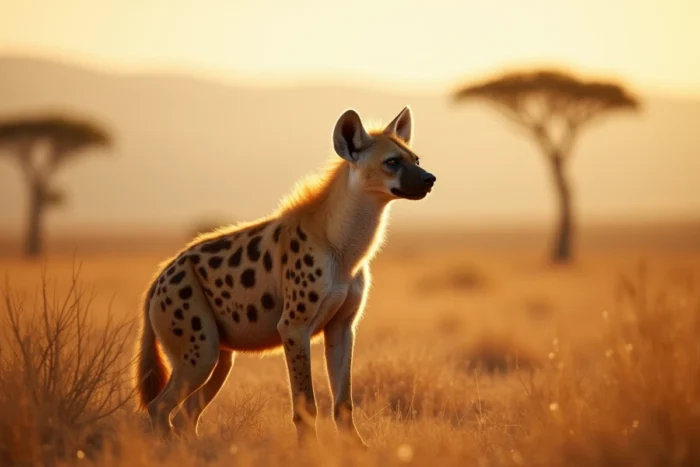
The female spotted hyena possesses a pseudo-penis and socially dominates males. The male seahorse carries the embryos in a ventral pouch and “gives birth.” These two cases do not fall under hermaphroditism or sex change. They are inversions of reproductive and social roles compared to mammalian stereotypes.
Recent work in behavioral ecology documents a higher frequency than previously thought of “non-conforming” behaviors to expected sexual dimorphism. In some birds, females adopt territorial roles typically associated with males, while males take on sole parenting. These observations expand the range of species that can be mobilized as symbols.
- The jacana, a tropical bird whose male incubates the eggs alone while the female defends the territory and mates with multiple partners
- Some cichlid species where parental roles shift from one sex to the other depending on group size
- The spotted hyena, whose social hierarchy systematically places females above males
These examples convey a different message than clownfish: biological sex does not predict social role. For non-binary identities, this dissociation between anatomy and social function constitutes a frequently mobilized naturalistic argument.
Limits of the animal metaphor for human gender identities
The Museum of Toulouse and ethologist Michel Kreutzer emphasize that the concept of gender is a construction of the human sciences, not directly transposable to animals. A hermaphroditic snail does not “identify” as anything. A clownfish does not experience dysphoria. Projecting human identity categories onto wildlife is a matter of analogy, not scientific demonstration.
This distinction does not render metaphors useless. Educational and activist movements use these examples to show that strict sexual binarity is not a universal law of life. The argument holds when it remains in the realm of illustration.
It becomes problematic when it slips into inverted essentialism, suggesting that nature “validates” non-binary identities. Biology describes reproductive mechanisms, not lived identities. Confusing the two weakens both scientific discourse and the legitimacy of the individuals concerned, who do not need a fish to justify their existence.
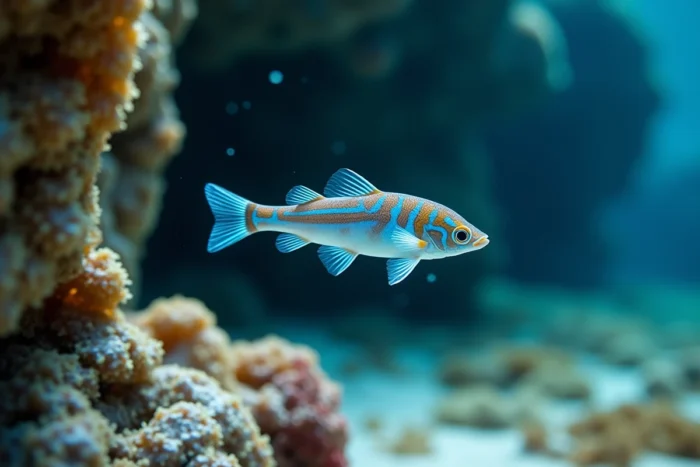
The most useful takeaway remains this: the diversity of animal sexual strategies far exceeds the few species usually cited. Research in behavioral ecology continues to document new ones, enriching the symbolic repertoire without ever turning it into proof.